

You might be choosing bottled water to avoid the "taste" of the tap, but a groundbreaking 2025 study has revealed that popular Maltese bottled brands are hiding something much smaller—and more concerning—than minerals: tens of thousands of plastic particles per litre.
This article is essential for families in Malta who rely on bottled water for "purity." We dive deep into recent local research from the University of Malta that quantifies microplastic contamination in local brands, compares our situation to global standards, and reveals how the bottling process itself might be the source of the problem. You will learn why switching to a home filtration system is no longer just about saving money—it's about protecting your health.
Key Points
- Shocking Numbers: Maltese bottled water contains an average of 35,877 microplastic particles per litre.
- Invisible Risks: Over 95% of these particles are smaller than 5 µm, meaning they are easily ingested.
- Process Failures: Contamination is linked to the bottling line, specifically bottle caps and in one brand the minimal filtration stages.
-
The Tappwater Solution: Why a 1–2 micron carbon block filter is your best defense against this "plastic soup."
Contents
The Scale of the Problem: Particles by the Thousand
Recent research conducted at the University of Malta has pulled back the curtain on the local bottled water industry. The study analyzed 50 samples from five popular Maltese brands and found that 84% of the samples were contaminated with microplastics.
The numbers are staggering. While some brands performed better than others, the average concentration was found to be 35,877 particles per litre. To put that in perspective, if you follow the recommendation of drinking 2 litres of water a day, you could be unknowingly consuming over 26 million plastic particles every year just from bottled water.
As local customer J.C. shared,
"We have stopped buying bottled water because the filtering makes tap water taste pleasant... the team behind the product has proved to be extremely helpful."
The reserach sampled 5 brands of local Maltese bottled water and found a suprisingly large difference in contamination rates across all brands.
| Brand | Average Particles Per Litre (ppL) |
| Brand 1 | 33,691 |
| Brand 2 | 15,040 |
| Brand 3 | 14,045 |
| Brand 4 | 46,154 |
| Beand 5 | 70,457 |
Reading into the details in the study it seems that most brands provided information on the process behind the bottling, however it was noted that Brand 4 provided very limited information and the study noted:
Brand 4 recorded the second-highest microplastic concentration. Limited information from the company made it difficult to determine exact causes, but inadequate bottle cleaning and mixed water sources (tap and groundwater) may contribute to the observed contamination.
Why the Gap? Uncovering the facts Behind the Brand Differences
How can one bottle of water contain five times more plastic than another sitting on the same shelf? The researchers discovered that the "cleanliness" of the water has less to do with the source and everything to do with the complexity of the factory line.
Minimal Treatment
The brand with the highest contamination (Brand 5, averaging over 70,000 particles per litre) was found to have the simplest production line. While it utilizes a double Reverse Osmosis (RO) system, it lacks the preliminary filtration stages that other brands use.
Brand 5 exhibited the highest microplastic concentrations among all brands, likely due to its minimal treatment process. While the water undergoes double reverse osmosis treatments, additional treatments such as preliminary filtrations are absent. The bottling process remains unclear, and uncertainties regarding bottle manufacturing and the cleanliness of the filling environment suggest multiple potential contamination sources.
Polishing Filters helpful
In contrast, the brands with the lowest counts (Brands 2 and 3) utilized more robust treatment processes. These included not just RO, but also fine polishing filters and thorough bottle-rinsing protocols. Interestingly, Brand 3 primarily uses municipal tap water, which has already been through the heavy-duty filtration of a government desalination plant before it even reaches the bottling facility—giving it a "head start" in purity.
Factory "Fingerprints": Equipment Contamination
The study revealed that each brand had its own "plastic fingerprint," proving that the machinery itself is shedding plastic into your drink:
- Industrial Piping: Brand 5 contained traces of PVC, often linked to the very pipes the water flows through.
- Acrylic Abrasion: Many brands showed traces of PMMA (acrylic), which researchers believe comes from the wear and tear of protective barriers on the manufacturing equipment.
- The Cap: Regardless of the brand, LDPE and PE—the materials used for bottle caps—were present in almost every sample. Every time a cap is screwed on by a machine or opened by a consumer, mechanical friction shears off microscopic fragments directly into the water.
This research confirms a vital truth for Maltese consumers: the more industrial processing and plastic packaging involved, the higher the risk of contamination. By using a Tappwater filter at home, you eliminate the factory pipes, the industrial abrasion, and the plastic cap friction entirely and get microplastic-free drinbking water from your tap.

Why Size Matters: The Tiny Threat
The study didn't just count the plastic; it measured it. The average particle diameter found in Maltese water was 2.37 µm. Most alarmingly, over 95% of all particles detected were 5 µm or smaller. The smallest was 1.4506 µm and the largest a whopping 80µm, almost the size of a human hair!
Why is this a problem? Particles of this size are at the threshold where they can interact with the human body on a cellular level. While research into the health effects is ongoing, the concern is that these tiny fragments can trigger immune responses or leach chemical additives directly into our systems. When you drink from a bottle, you aren't just drinking water; it seems that you're drinking the packaging.
Malta vs. The World: How We Compare
How does our locally produced bottled water stack up against international studies?
While some global studies using ultra-sensitive equipment have found even higher counts (including nanoplastics), the Maltese study counted microplastics larger than 1.4506 µm, thus underestimating the total count of micro and nanoplastics that were studied internationally.
However with the analysis focussed on only the locally produced brands it confirms that our local bottled water is far from the "pure" alternative it is marketed to be. We are effectively paying for a product that contains higher levels of plastic than the very tap water many are trying to avoid.
The Tappwater Advantage: Pure Hydration You Can Trust
The evidence is clear: the very packaging meant to keep water "safe" is the source of its contamination. In Malta, where we face the triple challenge of hard water, expensive bottled water, and high microplastic counts, there is a better way.
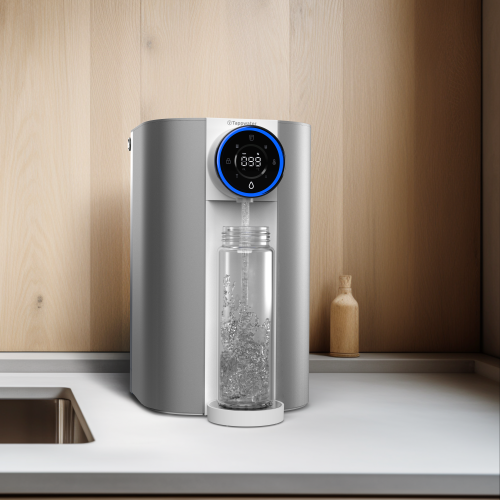
Tappwater Faucet Filters are designed with a technical core that specifically targets these issues. Our Activated Carbon Block technology is independently lab-tested to remove 99% of microplastics.
With a Tappwater filter you can eliminate bottled water entirely, and eliminate microplastics in your drinking water.

Why switch to Tappwater?
- Advanced Filtration: Our carbon blocks filter particles down to 1–2 microns, catching the very microplastics found in the Maltese study.
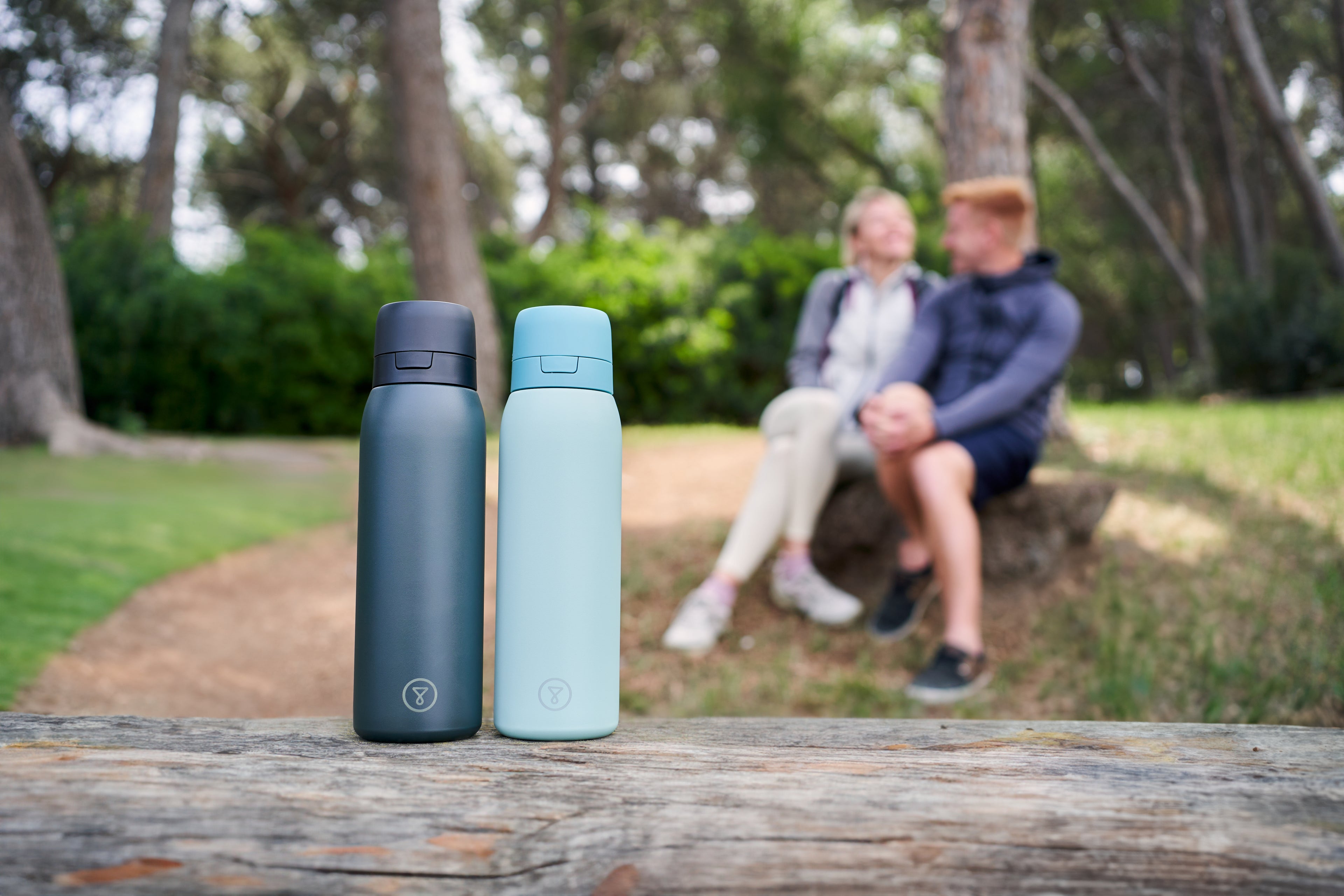
- Convenience: Stop hauling heavy 6-packs from the supermarket and dealing with BCRS machines. As one customer noted, "To say I am happy with my new EcoPro Chrome SMR is an understatement... The grandkids are loving filling their water bottles from the tap."
-
Cost-Effective: Tappwater is 10x cheaper than bottled water. The average family in Malta saves €236 per year and avoids using 600 plastic bottles.
Conclusion: Making the Switch
The University of Malta study is a wake-up call. We can no longer assume that "bottled" means "clean." By filtering your water at home with Tappwater, you take control of the bottling process yourself—eliminating the plastic friction from caps and the industrial contamination from bottling lines.
As our customer SC puts it:
"Very happy with the Tapp Eco Pro. Efficient and friendly service to boot!"
Join thousands of Maltese households and choose "pure hydration you can trust in every sip."
Sources:
Detection, Quantification, and Characterisation of Microplastics in Maltese Bottled Water
Informative FAQs on Microplastics in Maltese Bottled Water
How many microplastics are typically found in Maltese bottled water?
A 2025 study by the University of Malta found that local bottled water brands contain an average of 35,877 microplastic particles per litre. This means a person drinking two litres of bottled water a day could be consuming over 26 million plastic particles every year.
Which Maltese bottled water brands have the highest contamination?
The study analyzed five popular local brands and found that contamination levels vary significantly based on production processes. Brand 5 showed the highest levels, exceeding 70,000 particles per litre, likely due to a simpler production line that lacked preliminary filtration stages to "catch" micro-fragments before they reached the reverse osmosis membranes.
What is the main source of microplastics in bottled water?
Research indicates that the bottling process itself is a primary culprit. Friction from screwing on plastic caps (made of LDPE and PE), wear and tear of industrial piping, and the abrasion of protective acrylic barriers on manufacturing equipment all shed microscopic fragments directly into the water.
How small are the plastic particles found in local water bottles?
The vast majority of detected particles—over 95%—are smaller than 5 microns, with an average diameter of just 2.37 microns. These tiny fragments are particularly concerning because they are small enough to potentially interact with the human body at a cellular level.
Why does some bottled water in Malta have less plastic than others?
Brands that utilized more robust treatment processes, such as fine "polishing" filters and thorough bottle-rinsing protocols, had lower particle counts. Interestingly, brands using treated municipal tap water as their source often started with higher purity because the water had already undergone industrial-scale desalination and filtration.
Can home water filters remove microplastics?
Yes, high-quality home filtration systems are highly effective. For instance, activated carbon block filters designed to filter down to 1–2 microns can remove 99% of microplastics, catching the tiny fragments that are typically found in Maltese bottled brands.
Is tap water in Malta a safer alternative to bottled water?
While many residents avoid tap water due to taste, bottled water in Malta is far from the "pure" alternative it is marketed to be. By using a home filter, you can enjoy the safety of municipal water—which is already heavily filtered—while removing the microplastics and chemical leached by plastic bottles and industrial bottling lines.


![[WATCH] Tappwater Tales #1: The importance of water quality for horses in Malta](http://tappwater.mt/cdn/shop/articles/20260804.BalanceEQ_a4a7d1fe-e264-409a-b1ca-9410c7aadefc.png?v=1785829811&width=1080)


![[WATCH] Malta's Tap Water Challenge: The Tappwater Solution. A Look at the Science, the Tests, and the Deliciously Clean Results.](http://tappwater.mt/cdn/shop/articles/Why_We_lab_tested_maltas_water_Sqaure.png?v=1756738451&width=1080)
0 comments