

The quality of tap water in Malta is a frequent subject of concern for residents, particularly regarding its impact on dermatological and hair health. Malta’s water supply is characterized by high mineral content, commonly referred to as "hard water." While safe for consumption, the presence of calcium, magnesium, and chlorine can lead to observable degradation in hair texture and scalp condition.
This article examines the chemical interactions between hard water and human hair, and evaluates the efficacy of filtration systems in mitigating these effects.
Summary
This article provides an educational overview of how high concentrations of calcium and chlorine in Malta's water supply interact with hair keratin and scalp pH. Readers will learn the scientific causes of hair brittleness and how KDF-55 filtration technology functions to protect hair integrity.
Key Takeaways
- Mineral Accumulation: Calcium and magnesium create an insoluble film on the hair shaft, preventing moisture absorption.
- Chemical Oxidation: Chlorine strips natural sebum (protective oils), leading to brittle strands and breakage.
- pH Alteration: The alkalinity of hard water can disrupt the scalp’s natural acidic barrier, leading to irritation.
- Technical Mitigation: Specialized shower filters use redox reactions to neutralize harmful elements before they reach the body.
Contents
The Chemical Composition of Malta's Water
Malta's water supply is derived from a combination of groundwater and desalinated seawater. This results in a high concentration of dissolved minerals, primarily calcium carbonate. When this water is heated and used for showering, several biochemical processes occur that can negatively affect the user.
1. The Formation of Mineral Deposits on the Hair Shaft
Hair is naturally porous. When exposed to hard water, calcium and magnesium ions react with the fatty acids in shampoos to form an insoluble solid. This substance adheres to the hair cuticle—the protective outer layer of the hair strand. This coating creates a barrier that prevents water and conditioning agents from penetrating the hair core, resulting in hair that feels dry and inelastic.
2. The Impact of Chlorine on Keratin and Sebum
Chlorine is used in the municipal water system as a disinfectant. However, it is a powerful oxidizing agent. On the scalp, chlorine dissolves sebum, the natural oil produced by sebaceous glands to keep hair and skin hydrated. Without this protection, the protein structure of the hair, known as keratin, becomes exposed. This leads to weakened strands that are prone to physical breakage during routine brushing or styling.
3. Scalp pH and Dermatological Health
The human scalp maintains an "acid mantle" with a pH level typically between 4.5 and 5.5. This acidity is essential for inhibiting the growth of harmful bacteria. Hard water is generally alkaline. Repeated exposure can raise the pH of the scalp, potentially leading to conditions such as dandruff, seborrheic dermatitis, or general pruritus (itching).
Clinical Evidence: The Impact of Hard Water on Skin and Hair
Scientific research, including studies published in the Journal of Investigative Dermatology and the British Journal of Dermatology, has shed light on how hard water affects our bodies. The high concentrations of calcium and magnesium found in hard water interact poorly with the stratum corneum—the skin’s outermost protective layer—and the protein structure of our hair. These mineral interactions can lead to persistent dermatological issues and a noticeable decline in hair health.
One of the primary concerns identified by researchers is the impairment of the skin barrier. When we wash with hard water, minerals react with soaps and shampoos to create a residue known as "calcium soap." This residue is difficult to rinse away, causing surfactants to stick to the skin. This buildup irritates the skin and damages the lipid barrier, leading to increased transepidermal water loss. For many, this is the root cause of the chronic dryness, itching, and inflammation often associated with conditions like atopic dermatitis or eczema.
Beyond skin irritation, hard water significantly alters the physical properties of hair. Clinical examinations show that as calcium ions penetrate the hair shaft, they create rigid cross-links with keratin proteins. This process reduces the hair's natural elasticity and tensile strength, making the fibres stiff and brittle. Consequently, the hair becomes much more prone to snapping and breakage during routine combing. Furthermore, the alkaline residue left behind disrupts the scalp's natural acidic mantle, leaving hair looking dull and lifeless while increasing the risk of scalp inflammation.

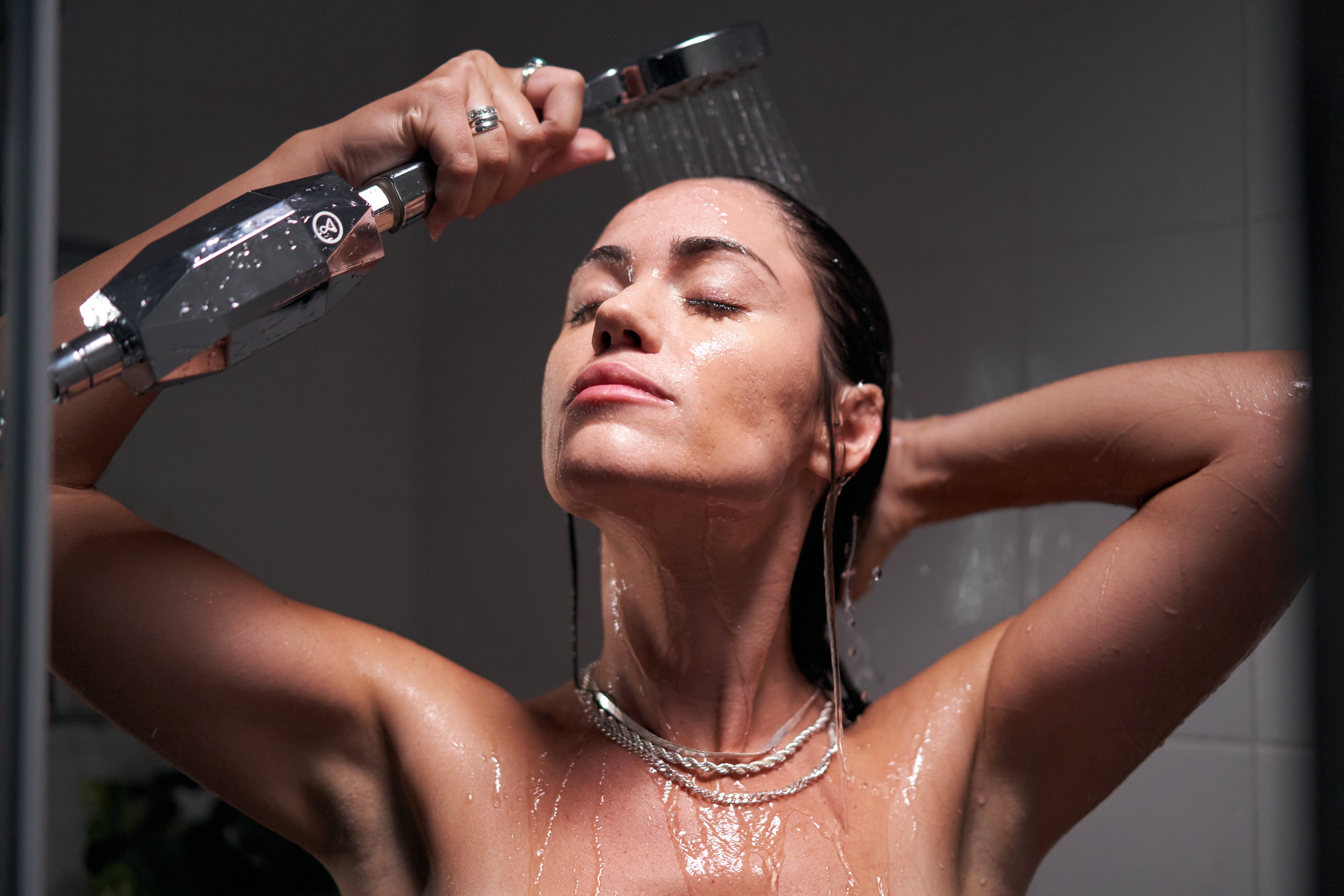
Filtration Technology: ShowerPro Diamond and ShowerPro Rain
To address these issues, many households install specialized filtration units. Unlike standard carbon filters, which lose efficiency in hot water, Tappwater systems utilize KDF-55 (Kinetic Degradation Fluxion) media.
| Feature | ShowerPro Diamond | ShowerPro Rain SMR™ |
| Primary Technology | 4-Stage Redox (KDF-55 | 5-Stage with additional Swedish Mineral Rock™ |
| Chlorine Reduction | Up to 95% | Up to 95% |
| Limescale Inhibition | Prevents crystal formation | Prevents crystal formation |
| Installation | Attaches to shower hose at shower head or mixer | Replaces the shower head with a rain shower attaching to the pipe |

KDF-55 and the Redox Process
KDF-55 is a high-purity copper-zinc formulation. It uses a chemical process called "redox" (reduction-oxidation) to transfer electrons between the filter media and contaminants. This process effectively converts free chlorine into harmless chloride ions and neutralizes heavy metals, ensuring the water is significantly less aggressive toward the hair and skin.
Observations from Residents in Malta
Data collected from users in Malta indicate a high correlation between the use of shower filtration and improved hair health:
- "I recently started using Showerpro after noticing my hair turning dry and rough after living in Malta for several months and I'm very pleased with the results. Within one week there's significant improvement in the health of hair." — Shubham
- "This product has literally saved my hair! I moved back to Malta just over 2 weeks ago and my hair felt like straw and was breaking at the slightest touch... After the first shower I noticed the difference." — Helen D
- "I had issues with itchy and flaky scalp from the water and this made a difference from the first wash! super easy to install, quick delivery and you feel the difference right away. love it." — Petra
FAQs on Shower Filtration in Malta
1. Does the filter completely remove all limescale?
No filter can remove 100% of minerals without a salt-based softening system. Salt-based systems cause other issues. Instead, Tappwater filters inhibit the formation of limescale crystals, preventing them from adhering to your hair and bathroom surfaces.
2. Is the hair loss caused by Malta's water permanent?
In most cases, what residents perceive as hair loss is actually "breakage." The hair snaps due to being brittle. Once the mineral and chlorine exposure is reduced, the hair can regain its natural strength.
3. How does the filter handle high water temperatures?
Standard carbon filters fail in hot water. Tappwater uses KDF-55 media, which is specifically designed to remain stable and effective at the temperatures typical of a domestic shower.
4. Will a shower filter help with sensitive skin?
Yes. By removing chlorine and heavy metals, the filter reduces the chemical load on the skin, which can significantly decrease irritation for those with eczema or sensitive skin.
5. How often must the filtration cartridge be replaced?
For optimal performance in Malta's conditions, cartridges should be replaced every 6 months or after 20,000 liters of use.
6. Does the filter reduce water pressure?
The ShowerPro series is designed for high-flow environments and generally does not cause a noticeable reduction in water pressure when used with standard domestic pumps.
7. Is professional plumbing required for installation?
No. The units are designed for manual installation and utilize standard threads that are compatible with the majority of shower fixtures found in Malta.


![[WATCH] Tappwater Tales #1: The importance of water quality for horses in Malta](http://tappwater.mt/cdn/shop/articles/20260804.BalanceEQ_a4a7d1fe-e264-409a-b1ca-9410c7aadefc.png?v=1785829811&width=1080)



![[WATCH] Malta's Tap Water Challenge: The Tappwater Solution. A Look at the Science, the Tests, and the Deliciously Clean Results.](http://tappwater.mt/cdn/shop/articles/Why_We_lab_tested_maltas_water_Sqaure.png?v=1756738451&width=1080)
0 comments