

Are you tired of hauling heavy six-packs of water up several flights of stairs, only to be met with a mountain of plastic bottles to recycle the next morning?
Summary:
This article is for residents in Malta and Gozo who are looking for a sustainable, cost-effective alternative to bottled water. You will gain a clear understanding of the different filtration technologies and product types available locally so you can decide which system best fits your kitchen and lifestyle.
Key Points:
- Understanding the difference between Activated Carbon and Reverse Osmosis (RO).
- The pros and cons of five common filter types: Faucet, Jug, Inline, Countertop, and Undersink RO.
- Why Malta’s "hard water" requires specific filtration solutions.
- How to choose a filter based on your household size and DIY comfort level
Contents
The Two Main Technologies: Activated Carbon vs. Reverse Osmosis
When searching for a water filter in Malta, you will primarily encounter two types of technology. Each has a different way of handling the minerals and contaminants found in local tap water.
Granular Activated Carbon
This technology uses highly porous carbon (often derived from coconut shells) to chemically bond with and trap contaminants., this filtration process is called Adsorption.
Pros: It is excellent at removing chlorine which improves the poor taste of tap water, and also removes lead, microplastics, and VOCs while keeping healthy minerals like magnesium and calcium in the water. It is generally more affordable and produces zero wastewater.
Cons: It does not "soften" water or remove total dissolved solids (TDS) like calcium carbonate, which means you may still see some limescale in your kettle.

Activated Carbon Blocks
Solid carbon blocks, like those used in Tappwater Faucet filters is an upgrade to Granular Activated carbon offering and aditional layer of filtration through a mechanical membrane filtering out everything between 0.5 microns and 2 microns. These filters pack a huge amount of filtration capacity into a small filter that is changed regularly and are tested to filter over 100 contaminants from tap water including bacteria, microplastics, nitrates and PFAS.
Reverse Osmosis (RO)
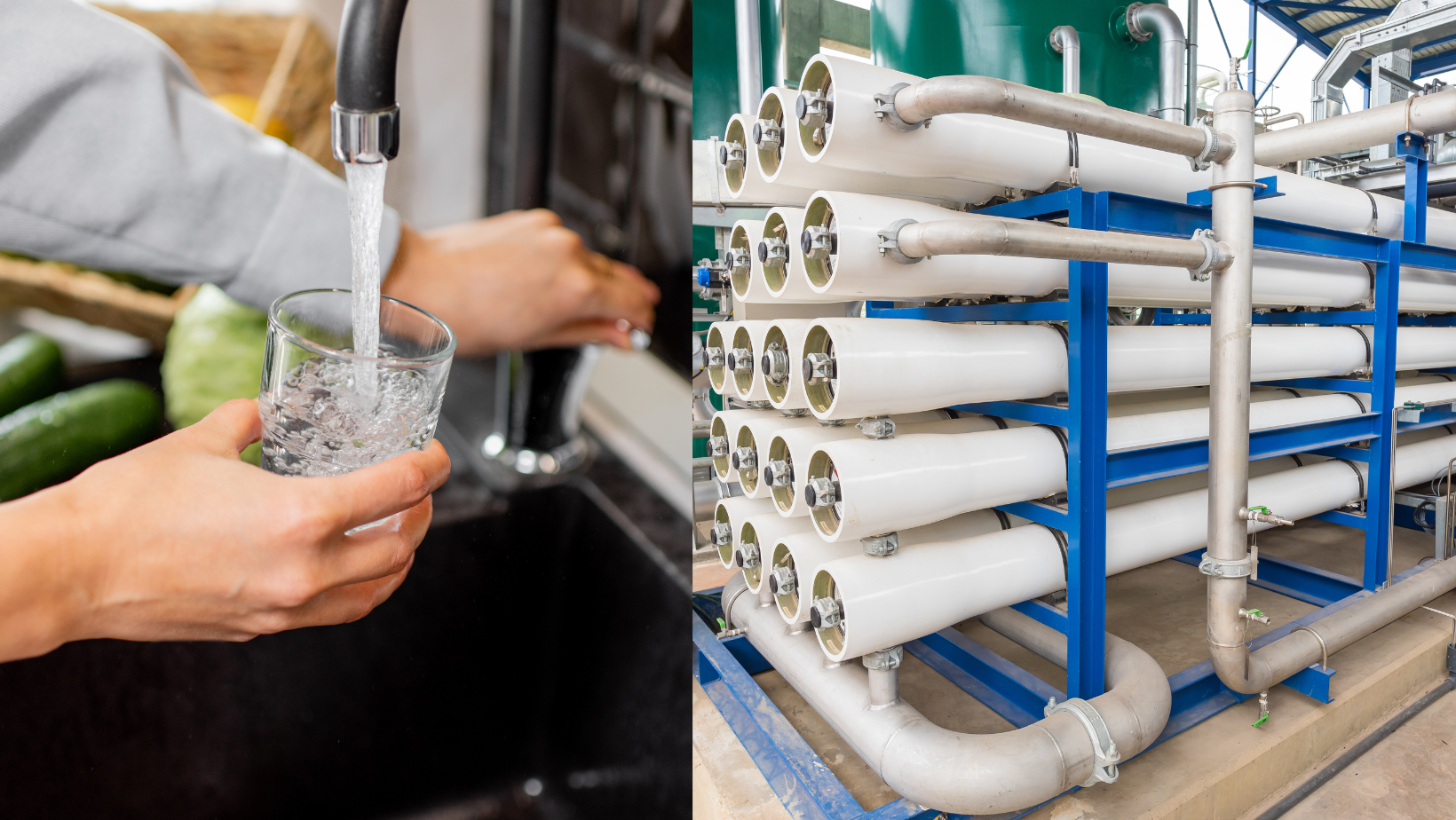
Reverse Osmosis (RO) systems force water through a semi-permeable membrane to strip away almost everything, including minerals. The actual RO membrane is just 1 stage in a filter unit of several stages with additional filters that protect the RO membrane before filtration and then to polish the taste of the water, and sometimes remineralise the water after filtration to imporve the taste.
Pros: It provides the highest level of purification, removing virtually all dissolved solids and "softening" the water significantly.
Cons: These systems can be expensive to install and maintain. Crucially, they produce "wastewater" (for every liter of clean water, several liters are often sent down the drain) and require significant space under the sink and a technician visit to service and maintain the system.
A simple carbon filter is all you need to enjoy great-tasting tap water at home. WSC has already done the heavy lifting with their advanced RO treatment plants, making home RO systems unnecessary. Additionally, home RO systems are more expensive to purchase and waste up to 70% of water during the filtration process, making them both costly and environmentally inefficient. Water Services Corporation Malta
Comparing Filter Types: Which One Fits Your Requirements?

Faucet Filters
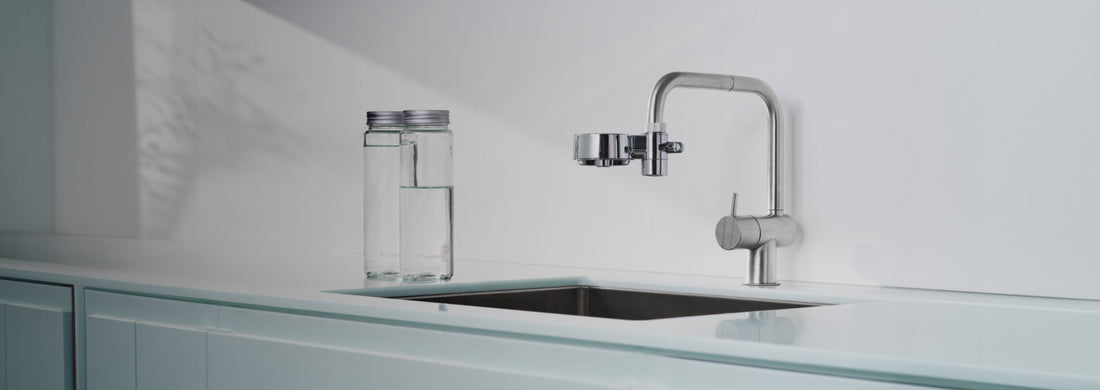
These are compact units that screw directly onto your existing kitchen tap.
Pros: Extremely easy DIY installation that takes minutes with no tools required. They provide high flow rates and are very cost-effective. Fast flow as the filters do not reduce water pressure, so great for cooking and drinking water.
Cons: They are visible on your tap, which might not suit every kitchen aesthetic.

Filter Jugs (Pitchers)
A portable jug where you pour tap water into a top reservoir and wait for it to drip through a filter.
Pros: No installation required; you can keep the jug in the fridge for chilled water. If your jug filters as it pours (Like PitcherPro SMR) then there will be no waiting!
Cons: You have to wait for the water to filter, and the capacity is limited. Using Granualar activated carbon the filters have less of a range of contaminant removal than other filters. Refill life is short, arround 150L per filter for most models.
PitcherPro SMR has a filter capacity of 600L and uses an activated carbon mesh that filters 70+ contaminants
Inline Filters
These are installed out of sight, usually under the sink, connected directly to the cold water pipe.
Pros: Hidden from view and can be easily connected to cold water inlet under the sink.
Cons: Often requires a bit more DIY knowledge or a plumber to install. An inline filter will not always have a separate faucet, and so all water from the cold is filtered including washing and drinking water, for some people this will feel like a waste. Refills are large and quite bulky to dispose of.

Countertop Systems
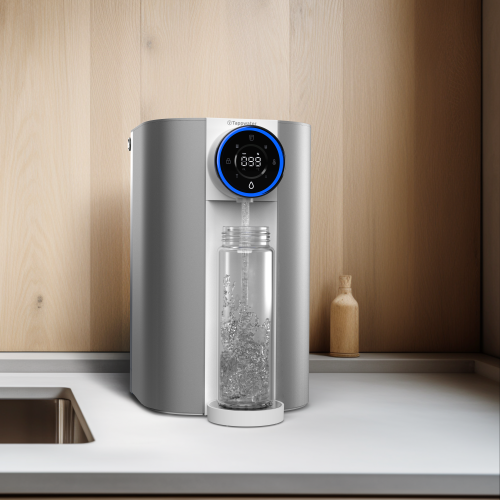
Larger units that sit on your counter and connect to the tap via a small hose or will use a raw water tank that requires no connection.
Pros: Can hold more advanced filtration stages than a simple faucet filter without needing undersink space.
Cons: Takes up valuable "footprint" on your kitchen worktop.
Undersink Reverse Osmosis (RO)
A multi-stage system tucked away in your cupboard, often requiring its own small faucet.
Pros: Cheaper units may not filter any better than Activated Carbvon blocks, but the more expensive 7 stage systems offer higher purity and removes limescale.
Cons: Complex installation, high upfront cost, and frequent water wastage. Suppliers often discount machine costs but front load long maintenance contracts. Its a higger cost if anything goes wrong. Takes up space under the sink and can be noisy.
Making the Right Choice for Your Household
The best filter for you depends on your priorities. If you are a busy parent or looking to maximise value from your investment, you likely want something that is "fit and forget like a faucet filter. These tend to ahve lower costs per litre for filtered water over all systems considered.
As one resident shared with us: "We have stopped buying bottled water because the filtering makes tap water taste pleasant... I noticed an improved taste even when using filtered water for tea or coffee".
If your main concern is the physical effort of carrying water, a jug filter provides an immediate solution but you will need to accept a lower filtration standard.
However, if you want only the best purity, a 7 stage Reverse Osmosis system might be worth the extra investment, loss of space and higher maintenance costs, although Water Services Corporation will point out that 70% of your tap water is already Reverse Osmosis water and so an Activated Carbon Filter may be just enough.
For most households in Malta, a high-quality Activated Carbon Faucet Filter offers the best balance of cost, ease of use, and taste improvement without the environmental downside of wasting water.
FAQs on the best water filter for Malta
1.Does a filter remove the "Malta tap water" taste?
Yes, most quality filters are designed specifically to remove 99% of chlorine, which is the primary cause of the unpleasant taste in local water.
2. Can I install these myself?
Faucet filters and jugs require no professional help. Undersink systems and RO usually require a plumber or advanced DIY skills.
3. Will a filter save me money?
Absolutely. Transitioning from bottled water can save the average Maltese family hundreds of Euros per year.
4. How often do I need to change the filters?
This depends on the model. Some last for 1,200 liters (about 3 months), while others require changes every 2 months. Reverse Osmosis filters tend to last a longer time, but are more expensive to change.
5. Are there grants available in Malta for water filters?
Yes, eligible homeowners can apply for a Government Grant of up to 60% on activated carbon systems and up to 40% certain Reverse Osmosis filtration systems.
6. Do filters remove healthy minerals?
Activated carbon filters keep minerals like calcium and magnesium in, while Reverse Osmosis removes them, some systems will then remineralise water for better tatse.
7. Is the water flow fast?
Faucet filters typically offer a steady, fast flow, whereas jugs and RO systems are much slower due to the membranes used.


![[WATCH] Tappwater Tales #1: The importance of water quality for horses in Malta](http://tappwater.mt/cdn/shop/articles/20260804.BalanceEQ_a4a7d1fe-e264-409a-b1ca-9410c7aadefc.png?v=1785829811&width=1080)



![[WATCH] Malta's Tap Water Challenge: The Tappwater Solution. A Look at the Science, the Tests, and the Deliciously Clean Results.](http://tappwater.mt/cdn/shop/articles/Why_We_lab_tested_maltas_water_Sqaure.png?v=1756738451&width=1080)




0 comments