

Are you tired of lugging heavy 6-packs of plastic water bottles from the supermarket, putting up with a harsh chlorine taste from your tap water, or wondering if invisible "forever chemicals" like PFAS are coming out of your kitchen tap?
Summary
This guide is written for homeowners and renters living in Malta who want clear, science-backed answers on how to effectively eliminate chlorine, PFAS, and microplastics from their tap water. You will discover a comprehensive comparison of top filtration systems—including our newly featured InlinePro under-sink filter, faucet filters, and countertop reverse osmosis systems—to help you select the exact filter setup tailored to your kitchen and budget.
Key Points
-
PFAS & Chlorine Concerns: Chlorine affects taste and odor in Malta's water supply, while PFAS ("forever chemicals") persist in water systems unless removed by advanced carbon block microfiltration or reverse osmosis.
-
Technology Options: Coconut-derived Activated Carbon microfiltration removes 99% of chlorine, lead, microplastics, and PFAS, while 7-Stage Reverse Osmosis provides 99.9% purification.
-
Introducing InlinePro: For a seamless kitchen setup, the InlinePro under-sink filter connects directly to your cold water pipe or a dedicated faucet, delivering pure water without taking up counter space.
-
The Malta tap water: Local tap water is safe to drink, but chlorination, and old pipe infrastructure create unpleasant taste and uncertainty.
-
Cost & Environmental ROI: Switching from plastic bottles saves the average Maltese family up to €236 per year, cuts out heavy supermarket runs, and eliminates up to 600 single-use plastic bottles per filter refill.
Contents
Understanding PFAS and Chlorine in Malta Tap Water
Ho does chlorine and PFAS get into tap water in Malta?
Chlorine is added during municipal treatment to sanitize water, while PFAS enter water systems through industrial products. Activated Carbon filters and Reverse Osmosis membranes capture both effectively.
Why Chlorine is Used and How It Affects Your Tap
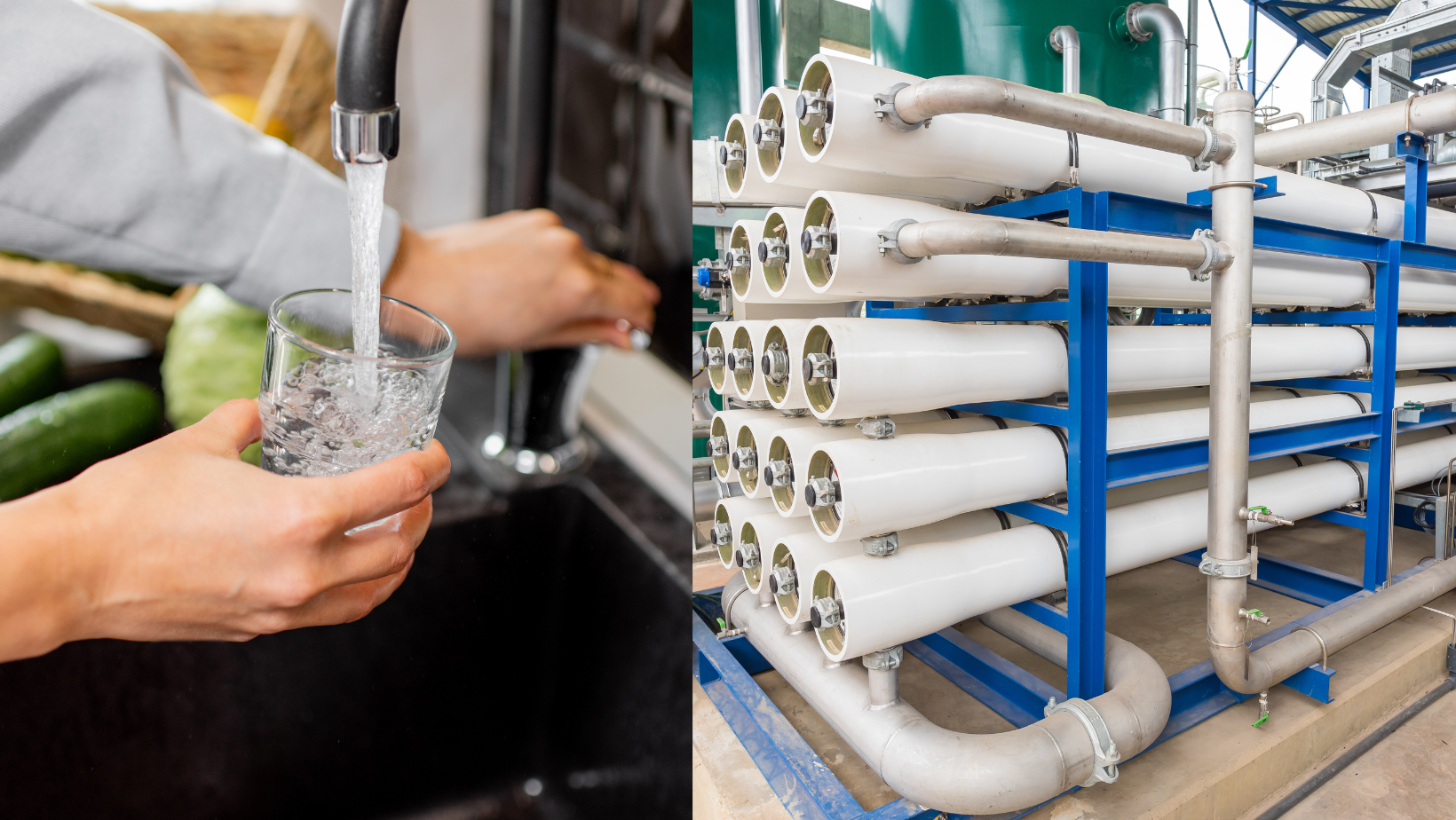
Tap water in Malta undergoes reverse osmosis desalination and chlorination to guarantee biological safety across the island's distribution network. While chlorine is vital for sanitization, it leaves a distinct chemical taste and odor that leads many residents to buy bottled water. Heating or boiling tap water does not fully eliminate chlorination by-products like Trihalomethanes (THMs).
What Are PFAS and Why Should You Care?
PFAS (per- and polyfluoroalkyl substances) are synthetic "forever chemicals" resistant to heat, water, and oil. Because they do not break down naturally in the environment or the human body, long-term exposure can pose health risks. Standard municipal treatment isn't always designed to trap trace organic pollutants, making household point-of-use filtration your most reliable line of defense.
Comparing Water Filtration Technologies
What methods of water filtration remove both chlorine and PFAS?
High-density Activated Carbon microfiltration and Reverse Osmosis (RO) membranes are the two best methods for removing 99% or more of PFAS and chlorine.
High Density Activated Carbon vs. Granular Carbon
Not all filters perform equally. Cheap jug filters rely on Granular Activated Carbon (GAC), where loose granules allow water to channel, letting contaminants pass through. Coconut-shell Activated Carbon high density technology either as a solid block or fibre mesh forces water through micro-pores in the range 0.5 to 2 nanometers, capturing 99% of chlorine, PFAS, lead, and microplastics via chemical adsorption.
Reverse Osmosis (RO) with Swedish Mineral Rock™
Reverse Osmosis pushes water through a 0.0001-micron membrane, stripping 99.9% of all dissolved solids, heavy metals, and PFAS. To avoid flat-tasting water, systems like the CounterTop RO SMR™ integrate Swedish Mineral Rock™ (SMR) to restore essential Calcium, Magnesium, and Potassium.
| Technology | Chlorine Removal | PFAS Removal | Microplastics Removal | Essential Minerals Preserved |
| Granular Carbon (Standard Jugs) | Moderate (70-80%) | Partial | Low | Yes |
| Activated Carbon High Density (InlinePro & Faucet) | High (99%) | High (99%) | High (99%) | Yes |
| 7-Stage RO + SMR™ (Countertop) | Very High (99.9%) | Very High (99.9%) | Very High (99.9%) | Yes, with remineralisation |
Evaluating Filter Options: InlinePro, Faucet, RO, & Pitchers
Direct Answer
The InlinePro provides hidden under-sink filtration directly through your tap, faucet filters offer quick DIY attachment, and countertop RO delivers total 7-stage purification.
1. Under-Sink Filtration: InlinePro Water Filter
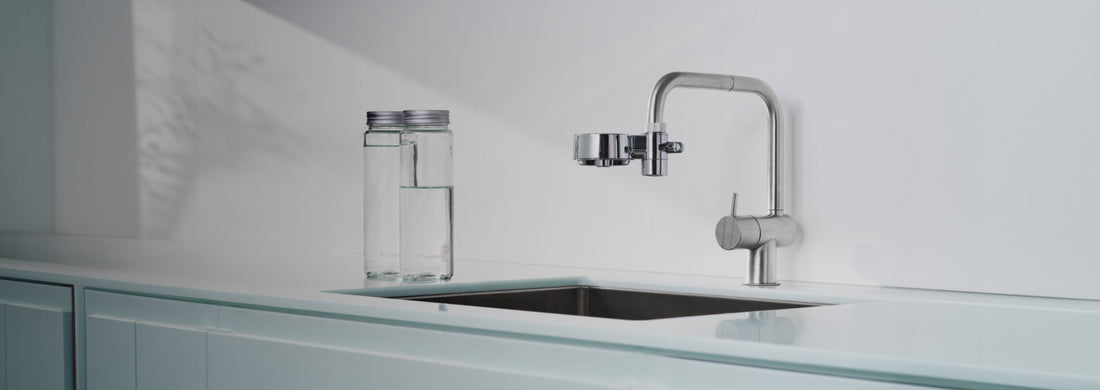
If you prefer a clean countertop with no visible attachments, the InlinePro is an ideal solution.
-
Seamless Under-Sink Fit: Installs directly under your kitchen sink inline with your cold water supply pipe or connects to a dedicated drinking water faucet.
-
High-Capacity Carbon Microfiltration: Utilizes high-density coconut-shell activated carbon block technology to filter 99% of chlorine, PFAS, lead, and microplastics.
-
Built-in Limescale Inhibitor: Inhibits limescale formation so it does not stick, while maintaining healthy calcium and magnesium levels in your water.
-
Unrestricted Flow: Delivers crisp, pure filtered water straight from your tap without taking up sink space or slowing down your kitchen routine.
2. Faucet Filters (EcoPro Chrome SMR)
For quick DIY setup without touching under-sink pipework, faucet filters attach directly to your mixer tap.
-
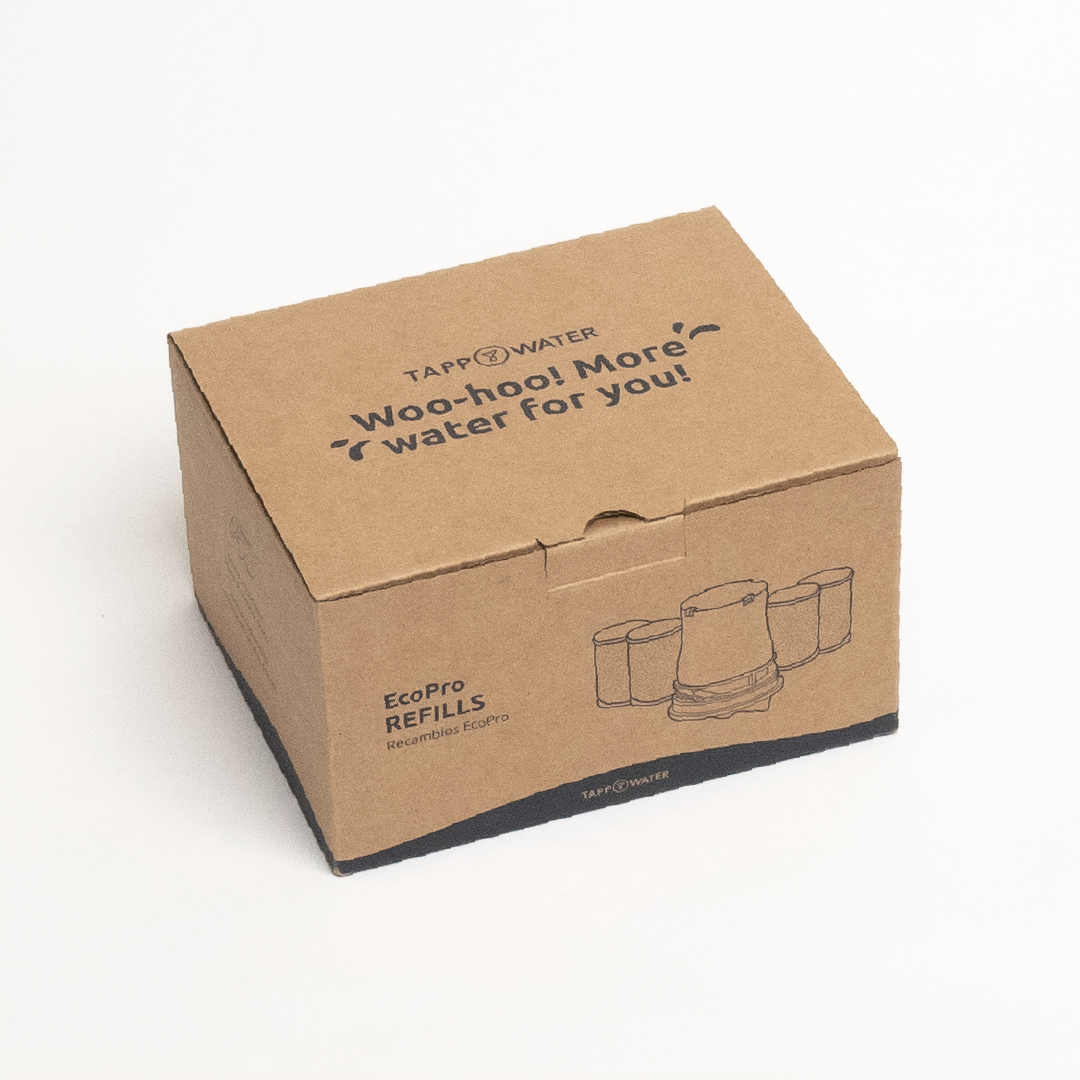
EcoPro: Filters 1,200L per cartridge (lasts 3 months), replacing up to 600 single-use plastic bottles per refill[cite: 2, 3].
-
EcoPro Chrome SMR: Combines 6-stage microfiltration with Swedish Mineral Rock™ for balanced remineralization and a sleek chrome design.
3. Countertop Reverse Osmosis (CounterTop RO SMR™)
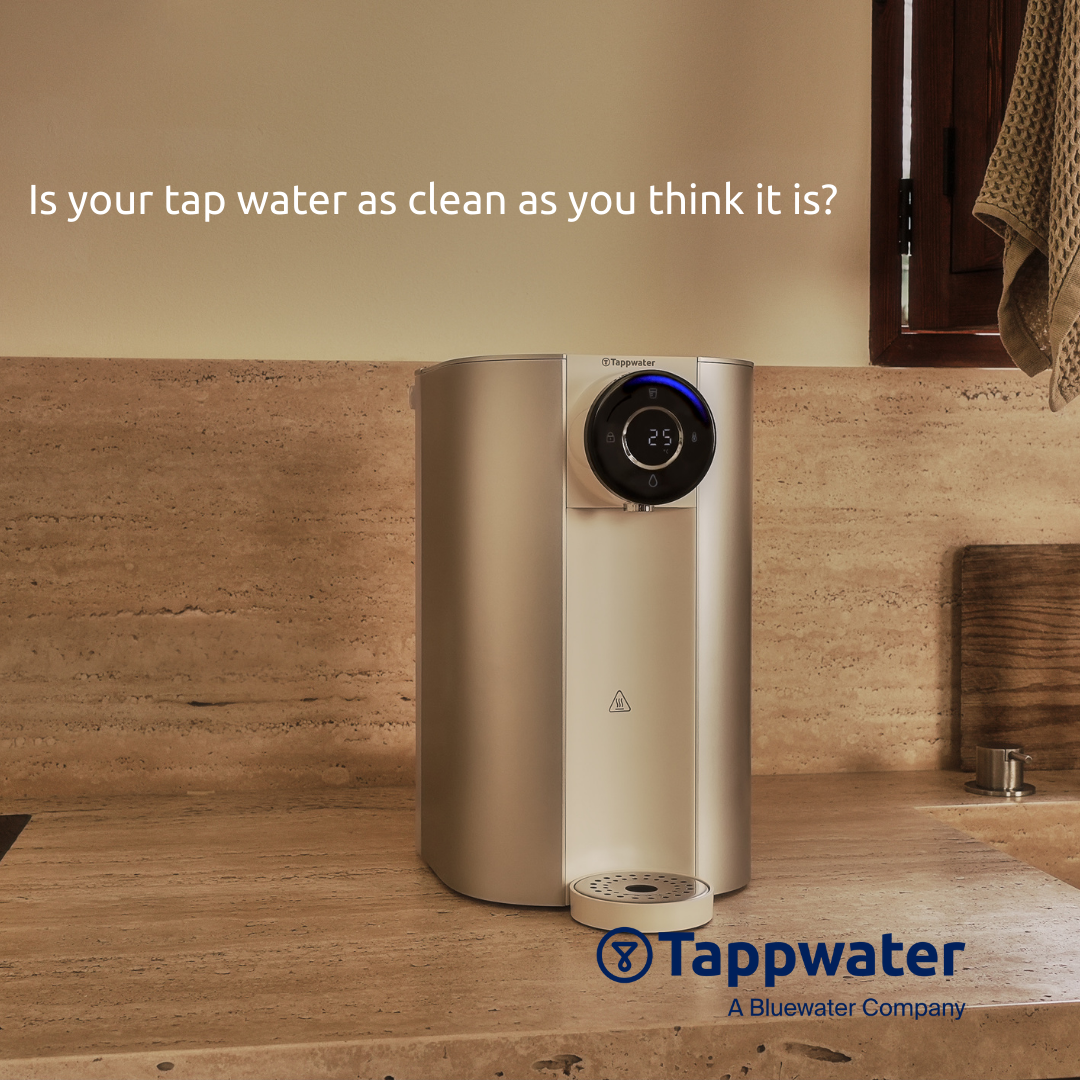
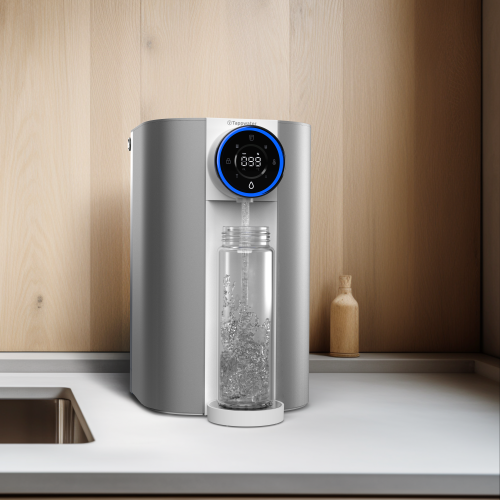
A plug-and-play solution requiring zero plumbing tools. Features 7-stage RO purification, 6 instant temperature settings (25°C to 95°C), and an industry-leading 3:1 pure-to-waste efficiency ratio.
4. Glass Filter Pitchers (PitcherPro SMR™)
Durable borosilicate glass pitchers featuring fast-flow microfiltration cartridges that remove over 80 contaminants while serving mineralized water at your dining table.
The Financial and Environmental Advantages
Direct Answer
Switching from plastic bottles to home water filtration saves the average Maltese household €236 per year while eliminating up to 600 single-use plastic bottles per refill[cite: 2, 3].
The True Cost of Bottled Water in Malta
Lugging 6-packs of plastic water bottles from supermarkets in Malta is heavy, time-consuming, and expensive. Managing bottle returns at BCRS reverse vending machines adds extra effort to your weekly routine.
-
Cost Savings: Bottled water is 10X more expensive per liter than filtering tap water at home.
-
The Supermarket Points Myth: Exchanging loyalty points for bottled water is still 7X more expensive than Tappwater, as those points could be spent on valuable groceries.
-
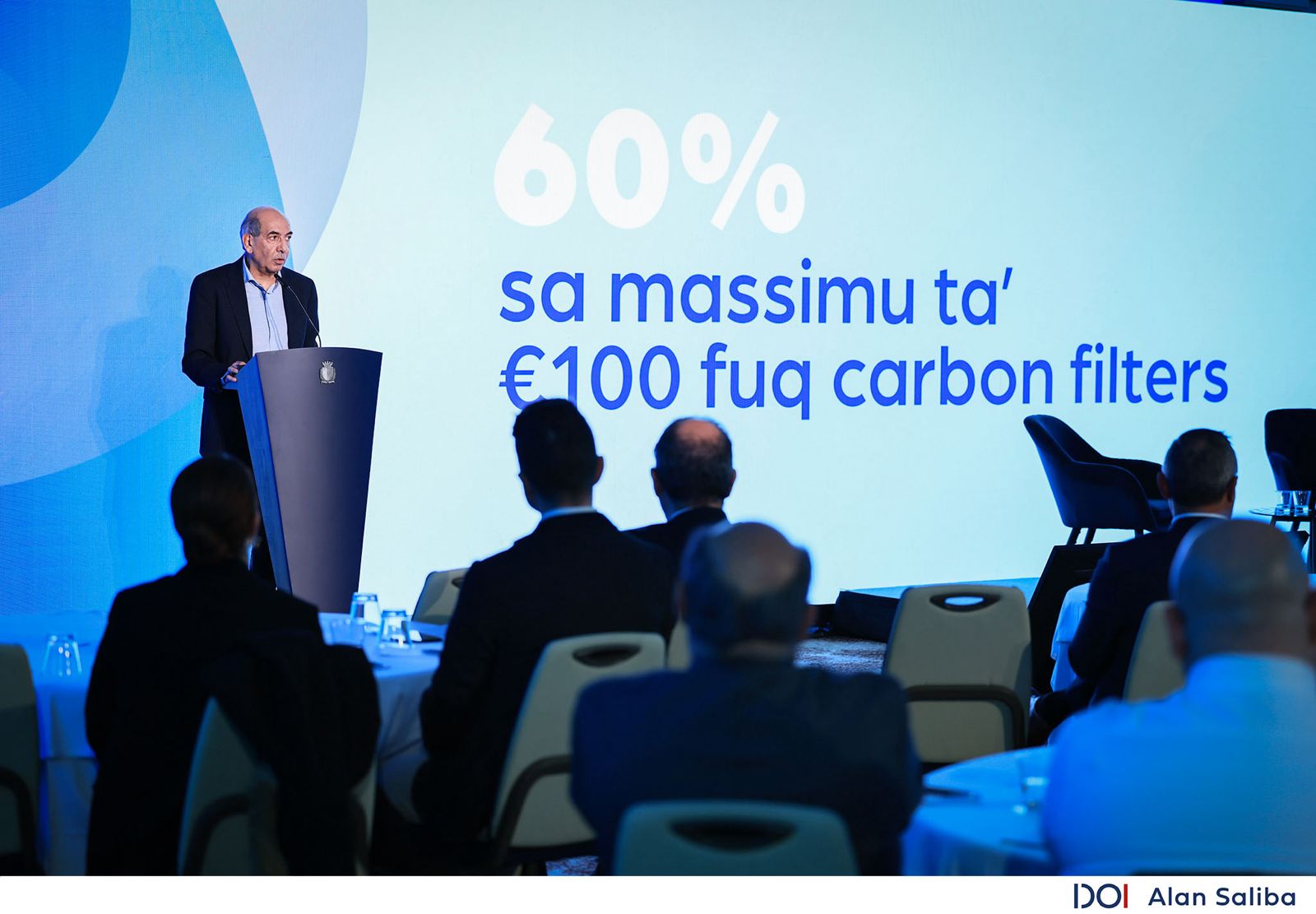
Government Support: Homeowners in Malta can take advantage of government grants covering 60% on faucet filters and 40% on RO units (up to €300 back).
How to Select the Right Filter for Your Malta Home
Direct Answer
Choose InlinePro for hidden under-sink convenience, an EcoPro Faucet Filter for simple DIY fitting, or CounterTop RO SMR™ for total reverse osmosis purity.
Real Feedback from Malta Households
Local users consistently share how switching to Tappwater transformed their hydration:
"Fitting the apparatus can be easily done by a person who is willing to try a bit of DIY. Once it's in place, it's extremely easy to use. We have stopped buying bottled water because the filtering makes tap water taste pleasant." — J. Caruana
"To say I am happy with my new EcoPur Chrome SMR is an understatement. I absolutely love it. Easy installation, within seconds... Great tasting water far better than the local bottled that I was buying." — Sue Grech
"Everything about our EcoPro Home filter has been positive... filtered water, which tastes great, removing chlorine, THMs, haloacetic acids and greatly lowering the nitrate content... In brief, it works." — Massimo
"I am delighted with the filter. The quality of the water is good, just as good as the bottled variety. No more plastic bottles. It is a liberation!" — Margaret Bozzino
Frequently Asked Questions
1. How does the InlinePro under-sink filter work?
The InlinePro connects under your sink in-line with your cold water pipe or a dedicated faucet. It uses activated carbon block microfiltration to filter 99% of chlorine, PFAS, microplastics, and heavy metals before water exits the tap.
2. Does an activated carbon block filter really remove PFAS from tap water?
Yes. High-density coconut-shell activated carbon blocks adsorb PFAS molecules effectively, alongside chlorine, lead, pesticides, and microplastics.
3. How does Tappwater handle Malta's hard water and limescale?
Tappwater filters incorporate a built-in limescale inhibitor within the carbon block. This breaks down minerals so scale doesn't cling to appliances, while preserving healthy calcium and magnesium in your drinking water.
4. Will an InlinePro filter affect my water pressure?
No. The InlinePro is engineered for high flow, ensuring a strong, steady stream of filtered water directly from your tap.
5. Is Reverse Osmosis better than an Activated Carbon filter for PFAS removal?
Both are effective. Activated Carbon Block filters (like InlinePro and EcoPro) remove 99% of chlorine and PFAS, while Reverse Osmosis removes 99.9% of all dissolved solids, heavy metals, and contaminants.
6. How often do filter cartridges need to be replaced?
The EcoPro faucet refill lasts 3 months (1,200L), while the CounterTop RO annual refill lasts 12 months (1,200L).
7. What if I don't like the taste of the water after installing a Tappwater filter?
All Tappwater products come with a 45-day money-back guarantee, allowing you to try filtered tap water completely risk-free.


![[WATCH] Tappwater Tales #1: The importance of water quality for horses in Malta](http://tappwater.mt/cdn/shop/articles/20260804.BalanceEQ_a4a7d1fe-e264-409a-b1ca-9410c7aadefc.png?v=1785829811&width=1080)



![[WATCH] Malta's Tap Water Challenge: The Tappwater Solution. A Look at the Science, the Tests, and the Deliciously Clean Results.](http://tappwater.mt/cdn/shop/articles/Why_We_lab_tested_maltas_water_Sqaure.png?v=1756738451&width=1080)

0 comments